

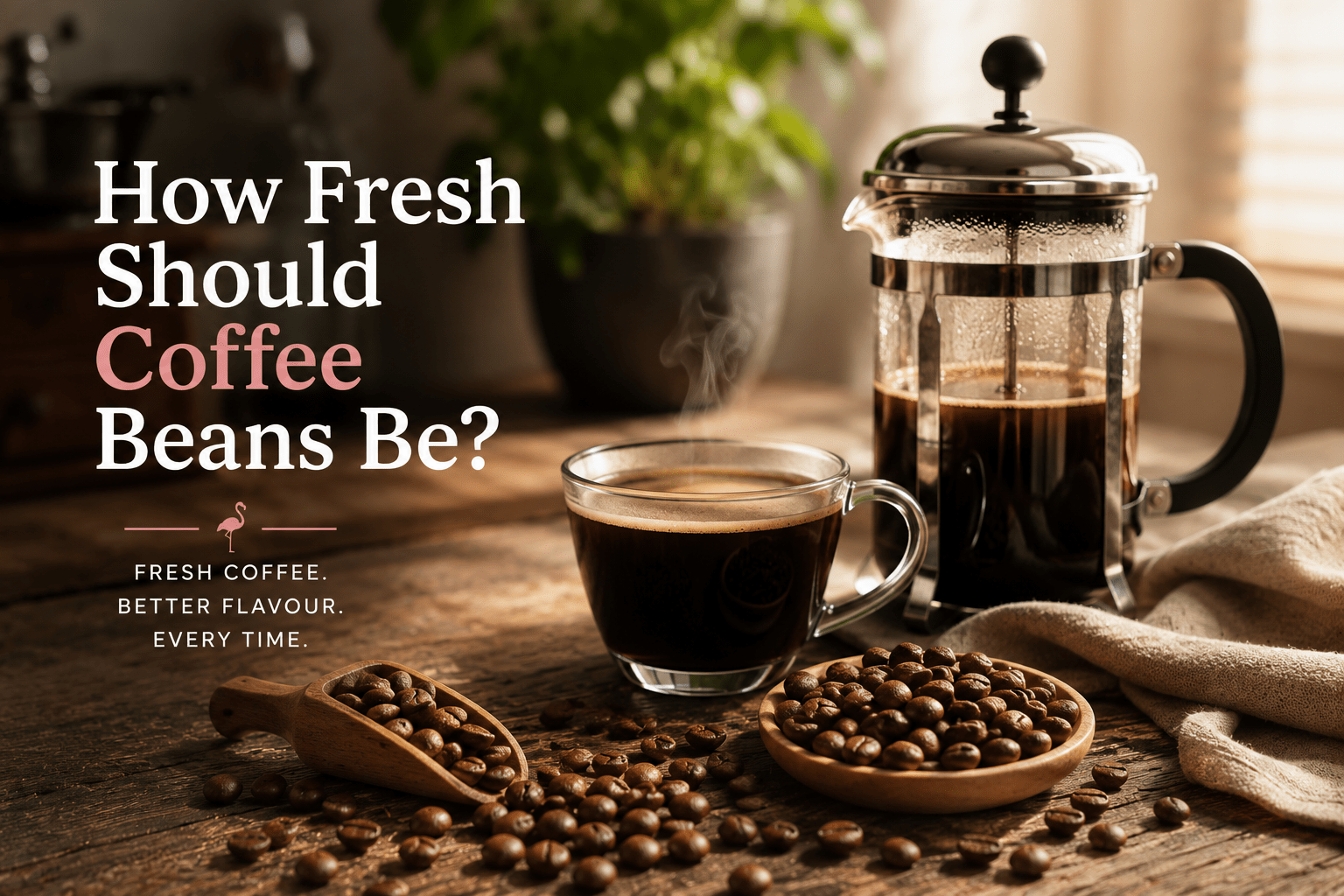
How Fresh Should Coffee Beans Be?
If you've ever wondered why coffee from your favourite café tastes richer and more aromatic than supermarket coffee, freshness is often the biggest reason.
Coffee is a natural product, and like fresh bread or fruit, it tastes best when enjoyed at the right time. Understanding how fresh coffee beans should be can transform your daily brew, whether you use a cafetière, espresso machine, AeroPress or filter coffee maker.
At Coffee Flamingo, we roast our coffee to order because we believe freshness is one of the most important ingredients in every great cup.
Why Freshness Matters
Coffee contains hundreds of delicate aromatic compounds that create the flavours we love.
Depending on the origin and roast profile, these may include notes of:
-
Chocolate
-
Caramel
-
Citrus
-
Berries
-
Nuts
-
Floral aromas
-
Stone fruits
-
Brown sugar
Once coffee is roasted, those compounds gradually begin to fade.
Although coffee doesn't suddenly become "bad", it slowly loses the complexity, sweetness and aroma that make freshly roasted coffee so enjoyable.
What Happens After Coffee Is Roasted?
Roasting transforms green coffee beans into the fragrant brown beans we recognise.
During roasting:
-
Natural sugars caramelise.
-
Oils begin developing.
-
Carbon dioxide forms inside the bean.
-
Hundreds of flavour compounds are created.
After roasting, the coffee starts releasing carbon dioxide in a process called degassing.
This is completely normal and is actually a sign that your coffee is fresh.
Can Coffee Be Too Fresh?
Surprisingly, yes.
Many people assume coffee is best the day it's roasted, but that's rarely true.
Immediately after roasting, coffee contains large amounts of trapped carbon dioxide.
If brewed too soon, the gas can interfere with extraction, leading to flavours that may seem uneven or slightly sharp.
Most coffees benefit from resting before brewing.
As a general guide:
-
Espresso: around 7 to 14 days after roasting.
-
Filter coffee: around 5 to 10 days.
-
Cafetière: around 7 to 14 days.
The exact timing varies depending on the coffee, but allowing freshly roasted beans to rest helps the flavours become more balanced.
When Is Coffee at Its Best?
For most brewing methods, coffee reaches its peak between 7 and 30 days after roasting.
During this period you can expect:
-
Rich aroma
-
Better sweetness
-
Balanced acidity
-
Fuller body
-
Clear tasting notes
This is why many specialty coffee roasters, including Coffee Flamingo, roast in small batches rather than producing large quantities months in advance.
How Long Do Coffee Beans Stay Fresh?
Whole beans stay fresh much longer than ground coffee.
As a general guide:
Whole Beans
Best enjoyed within:
4 to 8 weeks after roasting
Stored correctly, they continue producing excellent coffee during this period.
Ground Coffee
Ground coffee loses freshness much faster because much more of the coffee is exposed to oxygen.
Ideally, consume ground coffee within:
2 to 4 weeks of grinding
For maximum flavour, grind only what you need immediately before brewing.
How Oxygen Affects Coffee
Oxygen is one of coffee's biggest enemies.
Every time coffee is exposed to air, oxidation slowly breaks down its flavour compounds.
The result is coffee that tastes:
-
Flat
-
Dull
-
Less aromatic
-
Less sweet
Keeping oxygen away from your beans helps preserve freshness for longer.
Should You Store Coffee in the Fridge?
This is one of the biggest coffee myths.
The answer is no.
Coffee easily absorbs moisture and odours from surrounding foods.
Your expensive coffee can quickly begin tasting like cheese, onions or leftovers.
Instead, store coffee:
-
In its original resealable bag (if fitted with a one-way valve), or
-
In an airtight container.
Keep it somewhere:
-
Cool
-
Dry
-
Dark
-
Away from direct sunlight
-
Away from heat sources
Should You Freeze Coffee?
Freezing can work, but only if done correctly.
If you've bought several bags of freshly roasted coffee, freeze unopened bags until you're ready to use them.
Avoid repeatedly removing and returning the same bag to the freezer, as condensation can affect flavour.
For coffee you'll be drinking over the next few weeks, room-temperature storage is usually the better choice.
Whole Beans Stay Fresher Than Ground Coffee
Grinding dramatically increases the surface area exposed to oxygen.
This means flavour begins disappearing much more quickly.
Buying whole beans and grinding just before brewing is one of the easiest ways to improve your coffee.
If you don't own a grinder, Coffee Flamingo can grind your coffee ensuring it is freshly prepared before dispatch.
Signs Your Coffee Is No Longer Fresh
Older coffee isn't dangerous to drink, but you'll notice changes in the cup.
These include:
-
Little aroma when opening the bag.
-
Flat flavour.
-
Reduced sweetness.
-
Dull finish.
-
Weak crema when making espresso.
-
Less complexity.
Fresh coffee should fill the room with inviting aromas before you've even taken your first sip.
Why Freshly Roasted Coffee Tastes Better
Fresh roasting allows you to experience the coffee as the farmer and roaster intended.
Instead of tasting generic bitterness, you'll begin noticing subtle characteristics such as:
-
Milk chocolate
-
Hazelnut
-
Honey
-
Red berries
-
Citrus
-
Caramel
-
Cocoa
-
Stone fruits
Every origin has its own personality, and freshness allows those flavours to shine.
Why Coffee Flamingo Roasts in Small Batches
At Coffee Flamingo, we believe our customers deserve coffee that's roasted for flavour, not for warehouse shelves.
That's why we focus on:
-
Small-batch roasting.
-
Carefully sourced beans.
-
Fresh dispatch.
-
Whole bean or brewing-specific grinding.
-
Coffee subscriptions for maximum freshness.
Whether you're brewing a cafetière, espresso or pour-over, you'll enjoy coffee that has been roasted to showcase its natural character.
Frequently Asked Questions
How fresh should coffee beans be?
For most brewing methods, coffee is at its best between 7 and 30 days after roasting.
Do coffee beans expire?
Coffee doesn't suddenly expire, but it gradually loses flavour and aroma as it ages.
Should I buy whole beans?
Yes. Whole beans stay fresh significantly longer than pre-ground coffee.
Can coffee be too fresh?
Yes. Immediately after roasting, coffee benefits from resting for several days while excess carbon dioxide escapes.
How should I store coffee?
Store coffee in an airtight container or its original valve bag in a cool, dry, dark place away from moisture and sunlight.
Enjoy Coffee at Its Freshest with Coffee Flamingo
Fresh coffee isn't just a marketing phrase. It's one of the biggest factors influencing flavour, aroma and overall enjoyment.
By choosing freshly roasted beans, storing them correctly and brewing them within their peak freshness window, you'll enjoy a richer, sweeter and more satisfying cup every time.
At Coffee Flamingo, every batch is roasted with freshness in mind. Whether you're buying your first bag or joining one of our flexible coffee subscriptions, we're here to help you enjoy exceptional coffee, one cup at a time.
Freshly roasted. Carefully crafted. Delivered directly to your door.


