

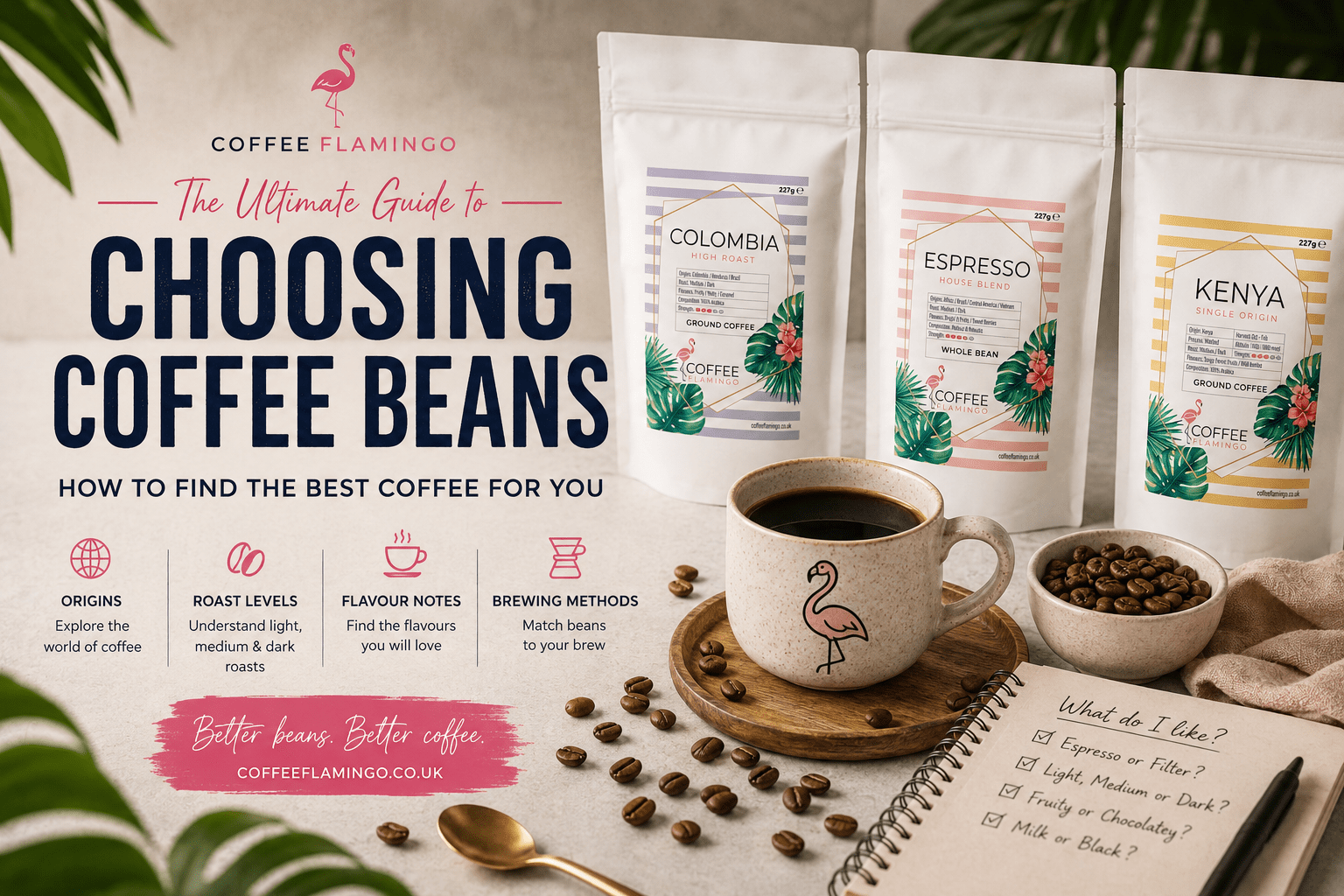
Trying to find the best coffee beans but not sure where to start? With hundreds of origins, roast levels, flavours and brewing methods to choose from, buying coffee can feel surprisingly complicated.
The good news? Choosing great coffee beans doesn't need to be.
Whether you're completely new to speciality coffee, looking to improve your morning brew, or simply wondering why one bag of coffee costs £8 and another costs £15, this guide will help you understand how to choose coffee beans that suit your taste, your brewing method and, most importantly, your cup.
We'll cover everything from coffee beans for beginners to roast levels, origins, freshness, grind size and speciality coffee beans, so you can confidently find the coffee that's right for you.
And if you're still not sure what you like by the end, don't worry. That's exactly what coffee tasting is for.
What Makes the Best Coffee Beans?
Let's get one thing out of the way first.
There isn't a single coffee bean that is officially the "best". The best coffee beans for you are the ones that taste great to you.
One person might want a rich, chocolatey espresso that works beautifully with milk. Another might prefer a bright, fruity coffee that tastes completely different every morning. Someone else might simply want a smooth, dependable cup that they can drink without thinking too hard about it.
That's one of the great things about coffee.
Coffee beans can have flavours ranging from chocolate, caramel and nuts to citrus, berries, stone fruit and floral notes. These differences are influenced by factors including where the coffee was grown, the variety of coffee plant, how the coffee was processed and how it was roasted.
The Specialty Coffee Association describes speciality coffee in terms of distinctive attributes that give a coffee or coffee experience additional value. Those attributes can include flavour, aroma, origin, processing and other characteristics.
So rather than asking: "What are the best coffee beans?"
A better question is: "What are the best coffee beans for me?"
Here's how to work it out.
1. Start With How You Drink Your Coffee
Before worrying about where your coffee comes from or whether it's a light or dark roast, think about how you actually drink it.
This is one of the easiest ways to narrow down your options.
Do you drink espresso?
If you're using an espresso machine, look for beans that can produce a balanced, concentrated shot.
You may prefer coffees with:
- Chocolate and nut flavours
- Caramel sweetness
- Fuller body
- Lower to moderate acidity
- Enough intensity to work with milk
If you regularly make cappuccinos, flat whites or lattes, a coffee with plenty of body can work particularly well.
Coffee Flamingo recommendation: Our Espresso House Blend combines Arabica and Robusta beans to create a rich, characterful coffee designed for espresso and espresso-based drinks.
Do you drink filter coffee?
Filter and pour-over brewing can really showcase the individual characteristics of a coffee.
If you enjoy drinking your coffee black, you might enjoy:
- Fruity flavours
- Citrus acidity
- Floral aromas
- Higher sweetness
- Lighter or medium roast profiles
Single-origin speciality coffee can be particularly interesting here because the brewing method allows more of the coffee's origin characteristics to come through.
Coffee Flamingo recommendation: Try our Kenya or Costa Rica for coffees with distinctive flavour profiles that make filter brewing more of an experience.
Do you use a cafetière?
Cafetière, or French press, brewing generally produces a fuller-bodied cup.
Look for coffees with:
- Chocolate flavours
- Nutty notes
- Caramel sweetness
- Medium to full body
Brazil and Peru are excellent starting points if you enjoy a smooth, approachable cup.
Do you add milk?
This is important.
Milk changes the balance of a coffee considerably.
A delicate coffee that tastes beautifully fruity when drunk black can become much less noticeable once you add a large amount of milk.
If you love lattes, cappuccinos or flat whites, look for coffees with enough body and flavour to stand up to milk.
Chocolate, caramel, nutty and richer flavour profiles are often a good place to start.
2. Choose Your Coffee Roast
You'll often see coffee described as:
- Light roast
- Medium roast
- Dark roast
But what does that actually mean?
Roasting transforms green coffee beans into the brown, aromatic beans we're familiar with. The degree of roasting affects the flavour, aroma, body and characteristics of the finished coffee.
Light Roast Coffee
Light roasted coffee tends to retain more of the characteristics associated with its origin.
You may notice:
- Fruity flavours
- Citrus
- Floral notes
- Higher perceived acidity
- More delicate flavours
Light roasts can be particularly interesting for filter and pour-over brewing.
If you're looking for coffee that tastes noticeably different from the traditional "coffee" flavour you might be used to, light or lighter-medium roasts can be a great place to explore.
Medium Roast Coffee
Medium roast is something of a middle ground.
You can get a combination of:
- Sweetness
- Body
- Origin characteristics
- Chocolate or fruit flavours
- Balanced acidity
For someone buying coffee beans for beginners, medium roast can be a very good starting point because it offers plenty of flavour without being too intense in either direction.
Dark Roast Coffee
Dark roasting generally produces more pronounced roasted flavours.
You might find:
- Dark chocolate
- Toasted nuts
- Caramel
- Smokier flavours
- Fuller body
If you like strong, bold coffee or primarily drink milk-based espresso drinks, dark or darker roasted coffees may appeal to you.
One important point: strong-tasting coffee doesn't necessarily mean it contains more caffeine.
Roast level affects flavour, but caffeine differences are much more complicated than simply "dark = stronger".
3. Think About Where Your Coffee Comes From
Coffee is grown across what's often called the coffee belt, a region around the equator where conditions are suitable for growing coffee.
Countries and regions produce coffees with remarkably different characteristics. And this is where choosing coffee gets really fun.
African Coffee
African coffees, particularly those from countries such as Kenya and Ethiopia, are often associated with vibrant and distinctive flavours.
You may find:
- Citrus
- Berries
- Floral notes
- Stone fruit
- Bright acidity
If you enjoy fruity or unusual coffees, African origins are well worth exploring.
Try: Coffee Flamingo Kenya.
Central and South American Coffee
Central and South American coffees offer enormous variety.
Depending on the country, region, variety and processing method, you might find flavours including:
- Chocolate
- Caramel
- Nuts
- Citrus
- Red fruit
- Brown sugar
This makes the region an excellent starting point for people exploring speciality coffee.
Try: Coffee Flamingo Brazil, Peru, Honduras or Costa Rica.
Single-Origin vs Blend
You'll also see coffee described as either single-origin or a blend.
A single-origin coffee comes from a defined geographical origin, allowing its characteristics to be explored more directly.
A blend combines coffees from different origins to create a particular flavour profile.
Neither is automatically better.
A great blend can produce a wonderfully balanced and consistent espresso, while a single-origin coffee can allow you to explore the unique characteristics of a particular place.
Think of it as the difference between ordering the house wine and choosing a bottle from a specific vineyard.
Both can be excellent. They're just different experiences.
4. Don't Ignore the Flavour Notes
One of the most intimidating things about buying speciality coffee can be the tasting notes.
You open a bag and see: "Red berries, jasmine, citrus and brown sugar."
And you're thinking: "It's coffee. Where did the fruit salad come from?"
The flavour notes aren't ingredients added to the coffee. They're descriptions of flavours and aromas that can be perceived in the brewed coffee.
For example, a coffee described as having chocolate and hazelnut notes isn't necessarily going to taste like someone melted a Dairy Milk into the brew.
Instead, those descriptors help you understand the character of the coffee.
If you like:
Chocolate, caramel and nuts
Look for coffees described as:
- Chocolatey
- Nutty
- Caramel
- Toffee
- Brown sugar
- Syrupy
Fruity and juicy flavours
Look for:
- Berry
- Citrus
- Cherry
- Stone fruit
- Tropical fruit
Floral and delicate coffees
Look for:
- Jasmine
- Floral
- Tea-like
- Bergamot
The trick is not to take tasting notes too literally.
5. Freshness Matters
If there's one thing we would encourage every coffee drinker to pay attention to, it's freshness.
Coffee is at its best when its flavour and aroma are properly preserved. Once coffee has been roasted, it gradually changes as it reacts with oxygen.
That's why the roast date is worth paying attention to when buying coffee beans.
A bag that tells you when the coffee was roasted gives you much more useful information than one that simply says "best before". For the freshest coffee experience, look for coffee from a roaster that clearly communicates when its beans were roasted and sends them out promptly.
This is one of the reasons buying freshly roasted coffee directly from a specialist roaster can make such a difference.
At Coffee Flamingo, we roast coffee with the aim of getting it into your hands fresh, so you can experience the character of the beans rather than wondering how long they've been sitting on a shelf.
Want to learn more? Read our guide to How Fresh Should Coffee Beans Be?.
6. Whole Beans or Ground Coffee?
If you have a coffee grinder at home, whole bean coffee is usually the way to go.
Grinding coffee increases the amount of surface area exposed to oxygen, meaning ground coffee loses freshness more quickly than whole beans.
Grinding immediately before brewing allows you to preserve more of the aroma and flavour you're looking for.
But there's an important caveat. Don't buy whole beans just because you've been told you "should".
If you don't own a grinder, freshly ground coffee from a good roaster is still a much better option than buying whole beans and leaving them sitting in a cupboard because grinding them every morning feels like an Olympic event.
The best coffee is the coffee you'll actually brew.
7. Match Your Grind to Your Brewing Method
Choosing great coffee beans is only half the equation. You also need to grind them appropriately.
As a general guide:
| Brewing Method | Typical Grind |
|---|---|
| Espresso | Fine |
| Moka pot | Fine to medium |
| Aeropress | Medium-fine to medium |
| Pour over | Medium |
| Filter machine | Medium |
| Cafetière / French press | Coarse |
Grind size affects how quickly water extracts flavour from the coffee. Too fine and your coffee can become bitter and over-extracted. Too coarse and it can taste weak, sour or under-extracted.
This is why buying the best coffee beans in the world won't automatically produce the best cup. Great coffee needs great brewing too.
8. What Is Speciality Coffee?
The term speciality coffee gets used a lot, but it doesn't simply mean "expensive coffee".
The Specialty Coffee Association's current definition focuses on coffee or coffee experiences with distinctive attributes that create additional value. Those attributes can include flavour, origin, production and processing characteristics.
In practical terms, speciality coffee encourages you to look beyond a generic bag labelled simply "coffee".
You can discover:
- Where the coffee was grown
- Who produced it
- How it was processed
- What variety it is
- How it was roasted
- What flavours you can expect
It's the difference between simply drinking coffee and becoming curious about what's actually in your cup. And you don't need to be a coffee expert to enjoy it.
9. Don't Assume More Expensive Means Better
Price is useful, but it isn't a quality ranking system. A £20 bag isn't automatically better for you than a £10 bag. You might prefer a particular flavour profile, origin or roast level that happens to cost less.
Instead of asking: "What's the most expensive coffee?"
ask: "What coffee gives me the experience I enjoy?"
Once you understand your preferences, buying coffee becomes much easier.
10. The Quick Guide to Choosing Coffee Beans
If you've skipped everything above because your coffee is already getting cold, here's the cheat sheet.
If you like chocolatey, rich coffee:
Try Brazil or Espresso House Blend.
If you like smooth, everyday coffee:
Try Peru or Honduras.
If you like fruity and vibrant coffee:
Try Kenya.
If you like bright, clean filter coffee:
Try Costa Rica.
If you want to explore several styles:
Try the Coffee Flight.
If you drink espresso:
Start with a coffee designed to work well as espresso, such as Espresso House Blend or Brazil.
If you drink filter:
Explore coffees where origin characteristics shine, such as Kenya or Costa Rica.
If you add milk:
Look for coffees with body and pronounced chocolate, nutty or caramel characteristics.
So, What Are the Best Coffee Beans?
The answer depends entirely on what you enjoy.
The best coffee beans are fresh, suited to your brewing method and, most importantly, enjoyable in your cup.
If you're just starting out, don't get overwhelmed by coffee terminology. You don't need to understand every processing method, roast profile or coffee-growing region before buying your first bag.
Start with what you already know you like.
Love chocolate? Start there.
Prefer fruity flavours? Explore African coffees.
Drink cappuccinos every morning? Look for a coffee with body that works well with milk.
Have absolutely no idea? That's where a tasting flight becomes your best friend.
Coffee isn't a test you can fail. It's an excuse to try something new.
Find Your Next Coffee
At Coffee Flamingo, we believe coffee should be exciting without being complicated.
Our range of freshly roasted coffees lets you explore different origins, flavour profiles and brewing styles, whether you're completely new to speciality coffee or already know your favourite origin.
Not sure where to start?
👉 Explore the Coffee Flamingo Coffee Flight
Or browse our full range of freshly roasted coffee beans and find the one that sounds like your kind of cup.
Frequently Asked Questions About Choosing Coffee Beans
What are the best coffee beans?
The best coffee beans depend on your personal taste, brewing method and preferred flavour profile. Freshly roasted speciality coffee beans can offer a wider range of distinctive flavours than generic coffee, but the "best" coffee is ultimately the one you enjoy drinking.
What coffee beans are best for beginners?
For beginners, approachable coffees with familiar flavours such as chocolate, caramel and nuts can be a good starting point. Medium-roasted coffees are also a useful introduction because they can offer a balance between sweetness, body and origin character.
How do I choose coffee beans?
Start by considering how you brew your coffee, whether you drink it black or with milk, and which flavours you enjoy. Then look at the coffee's origin, roast level, tasting notes and roast date. If you're unsure, a coffee tasting set is a great way to compare several coffees.
What are speciality coffee beans?
Speciality coffee is coffee recognised for distinctive attributes that give the coffee or coffee experience additional value. These attributes can include flavour, aroma, origin, production and processing characteristics.
Is whole bean coffee better than ground coffee?
Whole bean coffee generally retains its freshness and aroma better because the beans have less surface area exposed to oxygen. Grinding shortly before brewing can help preserve flavour. However, freshly ground coffee from a good roaster is still an excellent option if you don't have a grinder.
Does the origin of coffee matter?
Yes. Coffee-growing regions can produce very different flavour characteristics, although origin is only one factor. Variety, growing conditions, processing, roasting and brewing all influence the final cup.
How long do coffee beans stay fresh?
Coffee gradually changes after roasting. For the best flavour, buy from a roaster that provides a clear roast date and follow its storage and brewing recommendations. Keep beans sealed, away from heat, moisture and direct sunlight.
What coffee should I buy if I don't know what I like?
Try several coffees rather than committing to one large bag. A tasting set such as the Coffee Flamingo Coffee Flight lets you explore different coffees and identify the flavour profiles you enjoy most.
Final Coffee Flamingo Tip
Don't spend weeks trying to become a coffee expert before buying better coffee.
Start drinking better coffee while you're learning.
Try different origins. Change your brewing method. Taste coffees side by side. Pay attention to what you enjoy.
Eventually you'll stop looking at a coffee bag and wondering "Is this any good?"
You'll start looking at it and thinking:
"That's exactly my kind of coffee."


