

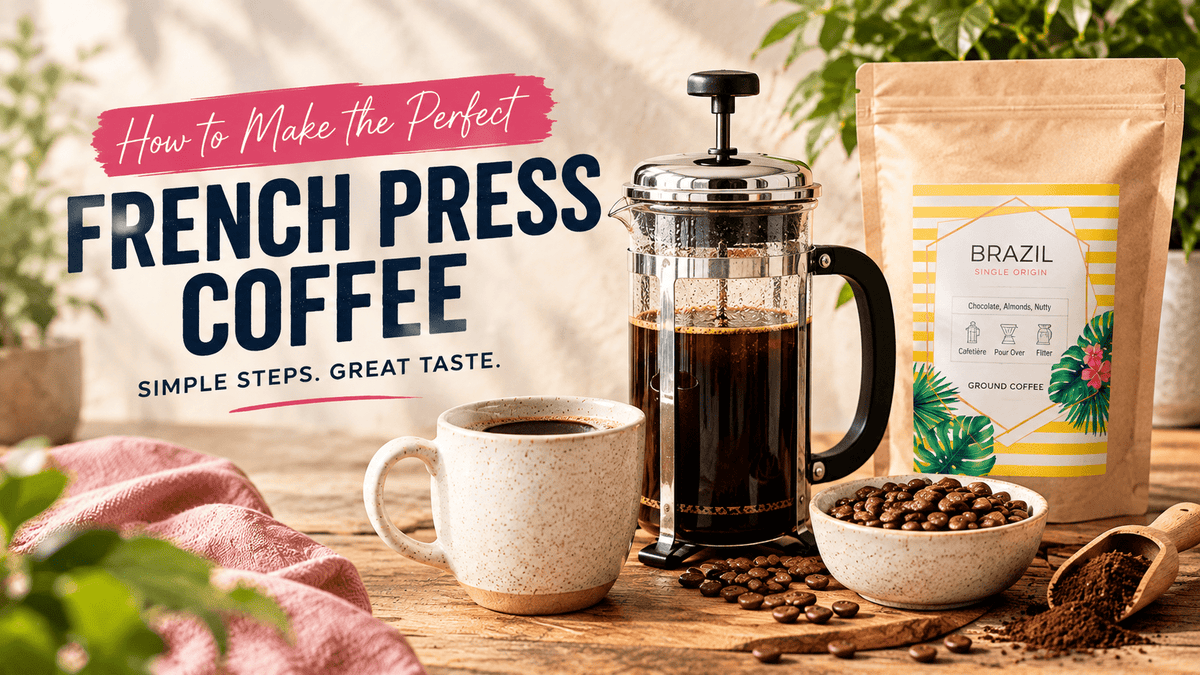
What Is French Press Coffee?
French press coffee is made by steeping ground coffee in hot water before separating the grounds using a metal mesh filter.
Unlike many paper-filter brewing methods, the metal filter allows more of the coffee's natural oils and fine particles into your cup. This creates the fuller body and distinctive texture that many cafetière drinkers love.
It's also wonderfully straightforward. You don't need a fancy coffee machine or a cupboard full of accessories.
What You'll Need
To make a great French press coffee, you'll need:
-
A French press or cafetière
-
A burr grinder, if using whole beans
-
A kettle
-
Scales or a measuring spoon
-
A timer
-
Your favourite mug
Scales are particularly useful because they make your results repeatable. Once you find a recipe you love, you can recreate it every morning without relying on guesswork.
The Perfect French Press Coffee Recipe
Here's a reliable starting point for a balanced, flavourful cup.
Ingredients and measurements
-
Coffee: 30g
-
Water: 500ml
-
Coffee-to-water ratio: 1:16
-
Grind: Coarse
-
Water temperature: Approximately 93–96°C
-
Brewing time: Around 4 minutes before pressing
This recipe makes roughly two generous mugs, depending on your serving size.
Prefer a stronger cup? Try a ratio of 1:15, using 30g of coffee with 450ml of water.
Prefer something lighter? Try 1:17, using 30g of coffee with 510ml of water.
There isn't one magic ratio that everyone must follow. Start here, taste the result and adjust to suit your preferences.
Step-by-Step: How to Make Cafetière Coffee
1. Grind your coffee
Use a coarse grind, with particles resembling coarse sea salt.
If the grind is too fine, more small particles can pass through the mesh filter, making your coffee muddy. Fine grounds can also extract quickly, increasing the risk of an unpleasantly bitter cup.
If you don't have a grinder, ask your coffee supplier for a grind suitable for cafetière brewing.
2. Heat your water
Bring your kettle to the boil, then allow the water to cool slightly before brewing.
A temperature around 93–96°C is a useful starting point. You don't need a specialist kettle to achieve this.
3. Add the coffee
Place your ground coffee into the clean, dry cafetière.
Add enough hot water to saturate all the grounds, then pour in the remainder until you reach 500ml.
4. Stir gently
Give the coffee a gentle stir to make sure all the grounds are wet.
Place the lid on the cafetière with the plunger raised. This helps retain heat while the coffee brews.
5. Let it brew
Allow the coffee to steep for around four minutes.
This gives the water time to extract the soluble compounds responsible for the coffee's flavour, sweetness and body. You can experiment with longer or shorter brewing times, but change one variable at a time so you can understand what improves the result.
6. Press slowly
Push the plunger down slowly and steadily. If you meet strong resistance, don't force it. Your grind may be too fine.
7. Pour and enjoy
Pour the coffee into your mugs rather than leaving it sitting in the cafetière.
Coffee continues to extract while it remains in contact with the grounds, which can lead to increasingly bitter flavours.
Now comes the important bit: drink it, enjoy it and notice what you like about the result.
What Is the Best Coffee for French Press?
The best coffee for French press brewing depends on your taste. However, coffees with chocolate, caramel, nutty or sweet flavour profiles are excellent starting points for beginners.
The French press's fuller body can work particularly well with coffees that have a rounded, satisfying character.
Brazil: Chocolatey and Approachable

If you enjoy rich chocolate flavours and sweet nuttiness, Brazil is a great place to start. It's a natural choice for anyone who wants a familiar, comforting cup without too much fuss.
Best for: Chocolate lovers and everyday coffee drinkers.
Explore Coffee Flamingo Brazil
Peru: Smooth and Balanced
Peru is worth exploring if you prefer a balanced cup with milk chocolate, citrus and syrupy sweetness. It's an excellent option when you want a coffee that feels approachable while still offering interesting flavour.
Best for: Drinkers who enjoy smooth coffee with a little brightness.
Honduras: Sweet and Comforting

Honduras offers another option for people who enjoy sweet, balanced coffee with milk chocolate and nutty characteristics. It's a lovely candidate for a relaxed weekend cafetière or a dependable morning brew.
Best for: Everyday brewing and familiar, comforting flavours.
Explore Coffee Flamingo Honduras
Not sure which one suits you? Try our Coffee Flight to explore different coffees before committing to a larger bag.
Five Common French Press Mistakes
Using the wrong grind size
A grind that's too fine can create a muddy cup and make plunging difficult. Start coarse and adjust if needed.
Using too much coffee
Adding more grounds doesn't automatically improve flavour. It can create an overly intense cup without fixing extraction problems.
Measure your coffee and water to keep your recipe consistent.
Using boiling water immediately
Very hot water can work for some coffees, but starting around 93–96°C is a useful way to build a repeatable recipe.
Leaving coffee in the cafetière
Once the brewing period is over, pour your coffee into mugs or a separate serving vessel. Don't leave it sitting with the grounds.
Expecting every coffee to taste the same
Different coffees respond differently to the same brewing recipe. Origin, roast level, grind size and freshness all influence the result.
Experiment a little. Your favourite cup might need a small adjustment.
How Do You Fix Bitter or Weak Cafetière Coffee?
If your French press coffee tastes bitter, try a slightly coarser grind or a shorter brewing time. You can also experiment with a lower water temperature. If it tastes weak or watery, try a little more coffee, a finer grind or a slightly longer brew.
If it tastes sour or sharp, your coffee may be under-extracted. A slightly finer grind or longer brewing time may help.
Change just one variable at a time. Otherwise, you won't know which adjustment made the difference.
Is French Press Coffee Better Than Filter Coffee?
Neither method is automatically better. They simply produce different results.
French press coffee generally has a fuller body because the metal filter allows more oils and fine particles into the cup.
Paper-filtered coffee tends to feel cleaner and lighter, often highlighting delicate flavour characteristics.
If you love rich, rounded coffee, the French press may be your favourite. If you prefer clarity and delicate flavours, pour-over brewing could be worth exploring.
You don't have to choose a side. Coffee is a broad church, and your kitchen can accommodate both.
Your Next Great Cup Starts Here
Ready to give your cafetière a little upgrade?
Explore the freshly roasted coffee range at Coffee Flamingo and find the beans that make your morning cup something to look forward to.
Frequently Asked Questions
How much coffee should I use in a French press?
A useful starting point is 30g of coffee for 500ml of water. Adjust the ratio to suit your taste.
How long should French press coffee brew?
Around four minutes is a good starting point. Experiment with timing and grind size to find your preferred balance.
What grind is best for cafetière coffee?
A coarse grind is generally recommended. It helps reduce sediment and makes plunging easier.
Can I use pre-ground coffee in a French press?
Yes. Choose coffee ground specifically for cafetière or French press brewing. Freshly ground beans can offer more aroma, but good pre-ground coffee is still a practical option.
Why is my French press coffee bitter?
Possible causes include a grind that's too fine, excessive extraction or coffee left sitting with the grounds. Adjust one variable at a time.
Can I use dark roast coffee in a French press?
Absolutely. Darker roasts can produce rich, bold cups, while medium roasts may offer a more balanced combination of sweetness and origin character. The right choice depends on your preferences.


