

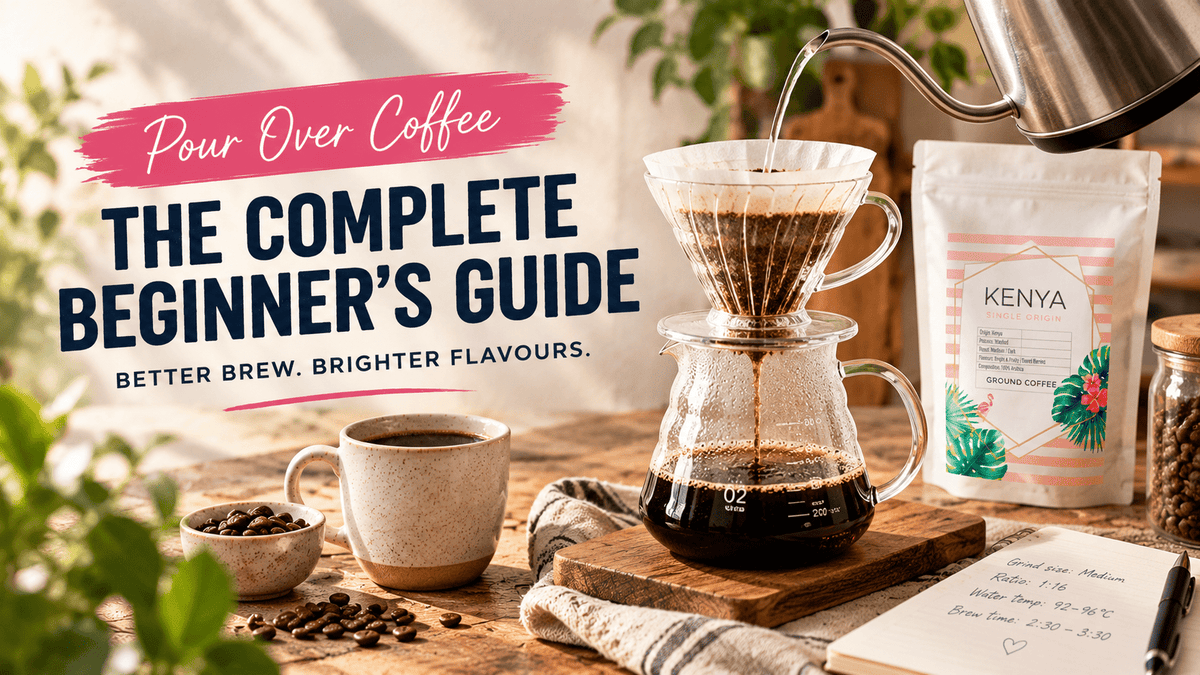
Pour Over Coffee?
Pour over coffee is a manual filter brewing method. You place ground coffee in a filter, add hot water and allow gravity to draw the brewed coffee into a cup or server below.
Popular equipment includes the Hario V60, Chemex and other manual filter brewers.
Although the equipment varies, the basic principles remain the same: use an appropriate grind, wet the coffee evenly, control your pouring and give the water enough contact time to extract flavour.
Compared with French press coffee, pour over usually produces a cleaner cup with less sediment, particularly when using a paper filter.
It can also make subtle flavour differences easier to appreciate, which is why it's popular among people exploring speciality coffee.
What You'll Need for Pour Over Coffee
For a straightforward V60 coffee recipe, gather:
-
A V60 or another pour-over brewer
-
A paper filter
-
Freshly roasted coffee
-
A grinder, if using whole beans
-
A kettle
-
A digital scale
-
A timer
-
A mug or coffee server
A gooseneck kettle can make pouring easier to control, but it isn't essential when you're starting out.
Don't let equipment shopping become a barrier to making good coffee. Start with what you have and upgrade when you know what you enjoy.
The Best V60 Coffee Recipe for Beginners
This recipe makes approximately one generous mug of filter coffee.
You'll need:
-
Coffee: 15g
-
Water: 250g (approximately 250ml)
-
Ratio: 1:16.7
-
Grind: Medium
-
Water temperature: Approximately 90–95°C
-
Total brew time: Around 2½–3½ minutes
These measurements are a starting point rather than a strict rule. Your brewer, filter, coffee and pouring technique can all affect the result.
Step 1: Prepare your filter
Place the paper filter in your V60 and rinse it with hot water. This isn't essential but a nice step for a well rounded brewing technique.
This helps the filter sit neatly against the brewer and warms the equipment. Discard the rinse water before adding coffee.
Step 2: Grind your coffee
Aim for a medium grind, broadly similar to granulated sugar. If your coffee drains too quickly and tastes weak or sour, try grinding a little finer. If it drains very slowly and tastes bitter or dry, try a coarser grind.
Step 3: Add the coffee
Place 15g of ground coffee into the filter.
Gently shake the brewer so the coffee bed sits level. An even bed helps the water move through the grounds more consistently.
Step 4: Start with the bloom
Start your timer and pour around 40–45g of water over the coffee, making sure the grounds are evenly wet.
Wait approximately 30–45 seconds.
This first pour is called the bloom. Freshly roasted coffee releases trapped gases when hot water reaches it, and allowing this initial stage can help the grounds wet more evenly.
Step 5: Continue pouring
Slowly pour in the remaining water using gentle, controlled circles.
Aim to reach 250g of total water by around 1 minute 30 seconds to 2 minutes, depending on your technique.
Try to keep the coffee bed evenly wet without pouring aggressively against the filter walls.
Step 6: Let the coffee drain
Allow the remaining water to pass through the coffee bed. A total brew time of around 2½–3½ minutes is a useful target for this recipe, but don't chase the clock at the expense of flavour.
Taste the coffee and adjust your grind or pouring technique if necessary.
Step 7: Enjoy the result
Give your coffee a gentle swirl and take a moment to notice the aroma and flavour.
Is it sweet? Fruity? Chocolatey? Bright and citrusy? The more coffees you try, the easier it becomes to recognise what you enjoy.
What Is the Best Coffee for Pour Over?
Pour over brewing is especially good for exploring coffees with distinctive origin characteristics, although almost any suitable coffee can work well.
For Coffee Flamingo drinkers, Kenya and Costa Rica are two interesting places to start.
Kenya: Explore Bright, Fruity Flavours
Kenyan coffees are often associated with vibrant fruit characteristics and bright acidity. If you enjoy coffees that feel lively and distinctive, Kenya can be a rewarding choice for filter brewing. Try it black to explore the flavour profile withou t milk softening the more delicate characteristics.
Best for: Coffee drinkers who enjoy fruit-forward flavours and a more expressive cup.
Costa Rica: Discover Honey-Processed Coffee
Costa Rica is a great opportunity to explore how processing can influence coffee flavour.
Honey processing involves removing the outer fruit while leaving some of the sticky mucilage on the bean during drying. Despite the name, honey processing doesn't mean honey is added to the coffee.
Depending on the coffee and its processing, you may notice sweetness, balance and a distinctive character. Pour-over brewing can be a lovely way to explore those characteristics.
Best for: Drinkers who enjoy a balanced cup with sweetness and interesting flavour detail.
Explore Coffee Flamingo Costa Rica
Can't decide? The Coffee Flamingo Coffee Flight gives you a way to explore multiple coffees before choosing your next favourite.
How to Make Your Pour Over Coffee Taste Better
Use freshly roasted coffee
Coffee gradually changes after roasting. Buying coffee at its freshest is the best place to start.
Get your grind right
Grind size has a major effect on extraction. A finer grind generally slows the flow of water and increases extraction. A coarser grind generally allows water to pass through more quickly.
Make small changes and taste the results.
Pour evenly
Uneven pouring can create uneven extraction, where some grounds contribute more flavour than others. Pour gently and aim to wet the coffee bed evenly.
Use a consistent ratio
Start with 15g coffee to 250g water. Once you have a cup you like, keep the ratio the same while experimenting with other variables.
Pay attention to your water
Coffee is mostly water, so water quality matters.
If your tap water has a strong taste or smell, filtered water may improve the flavour. Very hard or very soft water can also affect extraction. You don't need to become a water chemist. Start with water that tastes good on its own.
Why Does My Pour Over Coffee Taste Sour?
Sour or sharp coffee can indicate under-extraction, although some coffees naturally have bright acidity.
Try grinding a little finer, increasing the water temperature slightly or slowing your pour enough to improve contact with the grounds. Make one change at a time and taste again.
Why Does My Pour Over Coffee Taste Bitter?
Bitterness can come from over-extraction, an excessively fine grind or a pouring technique that creates uneven extraction. Try grinding slightly coarser and check that your total brew time isn't excessively long.
Remember that roast level also affects flavour. A darker roasted coffee may have more pronounced roasted or bitter notes even when brewed correctly.
Pour Over vs French Press: What's the Difference?
Both methods can produce excellent coffee, but the results differ.
Pour over coffee typically uses a paper filter and produces a cleaner cup with less sediment. It's excellent for exploring delicate aromas and flavour differences.
French press coffee uses a metal mesh filter and generally produces a fuller-bodied cup with more oils and fine particles. Read our guide to French Press.
Choose pour over if you enjoy a cleaner, more defined cup. Choose French press if you prefer richer texture and body. Or enjoy both, depending on the day.
Is Pour Over Coffee Difficult?
Not at all.
It can become as technical as you want it to be, but a simple recipe is enough to make an excellent cup.
Start with 15g of coffee, 250g of water, a medium grind and a controlled pour. Once you're getting consistent results, experiment with different coffees and small adjustments.
You may discover that a different origin transforms your morning routine more than another piece of equipment ever could.
Find Your Next Filter Coffee Favourite
Coffee is a journey of little discoveries. A new origin, a different flavour or a better brewing technique can change how you experience your daily cup.
At Coffee Flamingo, our range of freshly roasted coffees makes it easy to explore different origins and flavour profiles.
Start with Kenya for a lively filter coffee, or try Costa Rica to explore the character of honey-processed coffee.
Ready to put the kettle on?
Explore Coffee Flamingo's freshly roasted coffee range
Frequently Asked Questions
What is the best ratio for pour over coffee?
A ratio around 1:16 to 1:17 is a useful starting point. For example, use 15g of coffee with 250g of water.
What grind size is best for V60 coffee?
A medium grind is a good starting point. Adjust it depending on how quickly the water drains and how the coffee tastes.
How long should V60 coffee take?
Around 2½–3½ minutes is a useful target for a simple single-cup recipe, but the ideal time varies with the coffee, grind, filter and technique.
Do I need a gooseneck kettle?
No. A gooseneck kettle gives you greater control over pouring, but you can begin with a standard kettle and develop your technique.
Can I use any coffee for pour over?
Yes. You can use a range of coffees for pour over. Single-origin coffees can be particularly interesting because the method often highlights their individual flavour characteristics.
Is pour over coffee stronger than cafetière coffee?
Strength depends on the coffee-to-water ratio and extraction, not just the brewing method. Pour over often tastes cleaner, while cafetière coffee generally has a fuller body.


