

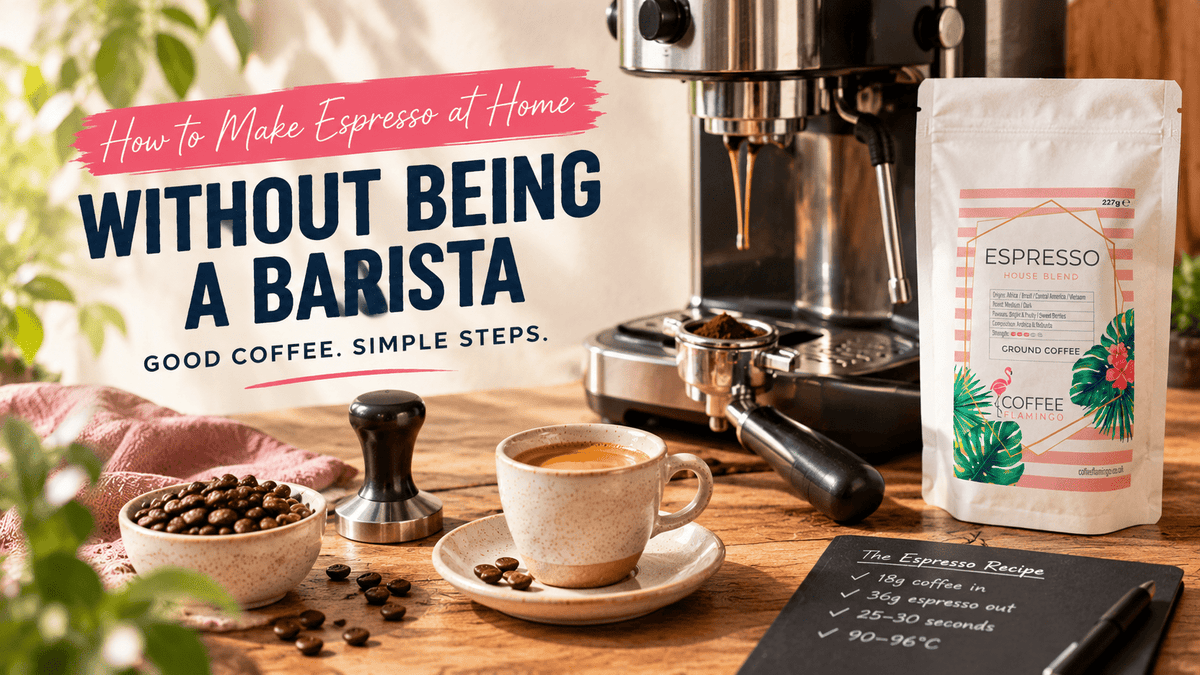
Espresso has a reputation for being difficult.
There's the grinder, the tamping, the pressure, the mysterious numbers on the machine and the occasional shot that tastes like you've accidentally brewed a handful of burnt toast.
But making good espresso at home doesn't have to be complicated.
Once you understand a few fundamentals, you can start making delicious coffee without turning your kitchen into a laboratory.
You don't need to get everything perfect on day one. You just need a good starting point.
What Is Espresso?
Espresso is a concentrated coffee brewed by forcing hot water through finely ground coffee under pressure. The result is a small, intense drink with a concentrated flavour and, when prepared well, a layer of foam known as crema.
Espresso is also the foundation for many popular café drinks, including:
-
Americano
-
Flat white
-
Cappuccino
-
Latte
-
Macchiato
Because espresso is concentrated, small changes in grind size, dose and extraction can have a noticeable effect on flavour. That's why consistency matters.
What You'll Need to Make Espresso at Home
To make espresso, you'll generally need:
-
An espresso machine
-
A suitable grinder - ideally a bur grinder
-
Freshly roasted coffee beans
-
Digital scales
-
A tamper, if required by your machine
-
A timer
A good grinder can make a significant difference because espresso requires a fine, consistent grind and precise adjustments.
If your machine uses a pressurised basket or pre-ground coffee, you can still make a satisfying drink, although the process may differ from the traditional espresso workflow described here.
The Best Beginner Espresso Recipe
Let's start with a simple recipe.
For a double espresso:
-
Ground coffee in: 18g
-
Espresso out: 36g
-
Brew ratio: 1:2
-
Extraction time: Approximately 25–30 seconds
-
Water temperature: Follow your machine's recommendations; around 90–96°C is a common starting range for many coffees
This is a starting point, not a law of coffee.
Some coffees taste better with a shorter or longer ratio, and extraction time will vary depending on your equipment and beans.
The most useful goal is to achieve a repeatable recipe that tastes balanced.
Step-by-Step: How to Make Espresso
Step 1: Warm up your machine
Follow the manufacturer's instructions to bring your espresso machine to operating temperature. A warm machine and portafilter can help improve consistency. If your machine requires it, run a little water through the group head before brewing and warm your handle. Either by running some water through it or by keeping it in the group head.
Step 2: Grind your coffee
Grind 18g of coffee to a fine consistency suitable for espresso. The grind should be fine enough to create resistance to the water, but not so fine that the shot barely flows.
Different beans and grinders require different settings, so expect to make small adjustments.
Step 3: Prepare the portafilter/handle
Place the ground coffee into the basket and distribute it evenly.
Break up obvious clumps and level the surface before tamping. Uneven coffee distribution can encourage channelling, where water finds easier paths through the puck instead of extracting evenly.
Step 4: Tamp evenly
Press the coffee down firmly and levelly using a suitable tamper. You don't need to keep increasing the pressure once the coffee is compacted. A consistent, level tamp is more useful than trying to win an arm-wrestling competition with your portafilter.
Step 5: Start the shot
Lock the portafilter into the machine and start brewing. Place your cup on the scales if possible and stop the shot when you reach approximately 36g of espresso.
Aim for around 25–30 seconds as an initial reference, while remembering that taste is more important than hitting a particular number. That said if your shot is pouring for significantly more than 30 seconds, you'll need some adjustment.
Step 6: Taste the espresso
Take a moment to assess the result. Does it taste balanced and sweet? Is it sharply sour, unpleasantly bitter or thin? Your taste will tell you what to adjust next.
How to Fix Espresso That Tastes Sour or Bitter
Espresso can be sensitive to small changes, but you don't need to change everything at once.
If your espresso tastes sour
Sourness can indicate under-extraction, although some coffees naturally have brighter acidity. Try grinding slightly finer. This can slow the flow of water and increase extraction.
You could also try a slightly longer extraction, keeping an eye on the flavour.
If your espresso tastes bitter
Bitterness may be linked to over-extraction, uneven extraction or the characteristics of a darker roast. Try grinding a little coarser or adjusting the shot yield. Make one change at a time so you can identify what improves the result.
If your espresso runs too quickly
Your grind may be too coarse, or the coffee may not be distributed evenly. Try a slightly finer grind and make sure the grounds are level before tamping.
If your espresso barely flows
Your grind may be too fine, or your dose may be too high for the basket. Try grinding slightly coarser or checking that the dose is appropriate for your equipment.
What Are the Best Espresso Coffee Beans?
Choosing the right coffee beans can make a big difference to the espresso you enjoy. 
There isn't one universally best coffee for espresso. Your preferred beans depend on whether you drink espresso straight, add milk or enjoy a longer Americano.
Coffee Flamingo Espresso House Blend
Our Espresso House Blend combines Arabica and Robusta beans to create a distinctive blend designed for espresso and espresso-based drinks. It's a natural starting point if you want a dedicated espresso coffee for your home machine.
The blend can be used as the foundation for a straight espresso or a milk-based drink, depending on how you dial in the shot and what flavours you enjoy.
Best for: Espresso drinkers, cappuccinos, flat whites and lattes.
Explore Coffee Flamingo Espresso House Blend
Could You Use Single-Origin Coffee for Espresso?
Absolutely.
Although blends are often used to create a consistent espresso profile, single-origin coffees can be exciting to explore in an espresso machine, too.
Brazil may appeal if you enjoy chocolate and nut characteristics, while other origins can bring brighter fruit or citrus notes.
The key is to experiment with the coffee and adjust your recipe accordingly.
How to Make a Better Flat White, Cappuccino or Latte
Once you've made a good espresso, turning it into a milk-based drink is the next step.
Flat white
A flat white combines espresso with steamed milk and a fine layer of micro-foam. The espresso remains prominent, so a balanced shot is important.
Cappuccino
A cappuccino traditionally balances espresso, steamed milk and a more substantial layer of foam. The texture can make the coffee feel different from a flat white. A cappuccino should have equal 3rds of each element, Espresso, milk, foam.
Latte
A latte contains espresso and a larger proportion of steamed milk, producing a softer, creamier drink.
For all three, start by getting the espresso right. If your shot tastes unpleasant before you add milk, steaming more milk won't necessarily solve the underlying problem.
Does Espresso Need Dark Roast Coffee?
No. Espresso is a brewing method, not a roast level.
You can use light, medium or dark roasted coffee for espresso. Different roast levels produce different flavour profiles and can require different extraction settings.
Darker roasts often produce more pronounced roasted flavours, while lighter roasts may offer more acidity and origin character. If you're new to espresso, start with a coffee designed for the style of drink you enjoy, then experiment once you have a reliable recipe.
Is Espresso Stronger Than Filter Coffee?
Espresso is more concentrated by volume, but that doesn't automatically mean a single espresso contains more caffeine than a mug of filter coffee.
A mug of filter coffee is usually much larger, so the total caffeine can be higher even though the drink tastes less concentrated.
Strength, flavour intensity and caffeine content are different things.
Common Espresso Mistakes to Avoid
Changing too many variables at once. Adjust one thing, pull another shot and taste the difference.
Ignoring your dose and yield. Weighing coffee in and espresso out makes results easier to repeat.
Using an unsuitable grinder. Espresso needs a fine, adjustable grind to control extraction effectively.
Focusing only on crema. Crema can be visually appealing, but it doesn't guarantee that an espresso tastes good.
Expecting every coffee to use the same settings. Different beans can require different grind sizes and recipes.
Your Home Espresso Journey Starts Here
You don't need a barista certificate to make a great espresso.
Start with 18g of coffee, aim for around 36g in the cup, use a fine grind and adjust based on taste. Once you can repeat a balanced shot, you can experiment with different beans and build the drinks you love.
For a straightforward starting point, explore Coffee Flamingo's Espresso House Blend.
It's designed for espresso and espresso-based drinks, making it a natural candidate for your home coffee routine.
Ready to upgrade your espresso?
Frequently Asked Questions
How much coffee should I use for a double espresso?
Around 18g of ground coffee is a common starting point, producing approximately 36g of espresso at a 1:2 ratio. Follow your basket's recommended dose and adjust to taste.
How long should espresso take to extract?
Around 25–30 seconds is a useful starting point for many double espresso recipes. However, the ideal time depends on the coffee, equipment, grind and recipe.
What grind size is best for espresso?
A fine grind is typical. Adjust it until you achieve a balanced extraction and a suitable flow rate for your machine.
Can I make espresso without an expensive machine?
You can make concentrated coffee using alternatives such as a moka pot or an AeroPress, but these methods don't produce true espresso in the same way as a machine that brews under espresso pressure.
What are the best espresso coffee beans for beginners?
Start with beans designed for espresso and suited to your preferred drink. Coffee Flamingo's Espresso House Blend is a practical starting point for espresso and milk-based coffee.
Can I use any coffee beans in an espresso machine?
Many coffees can be brewed as espresso, but different beans may require adjustments to grind size, dose and yield. A blend designed for espresso can make a helpful starting point.


